Serving Morgan Hill, CA and surrounding areas. (669) 766-0045
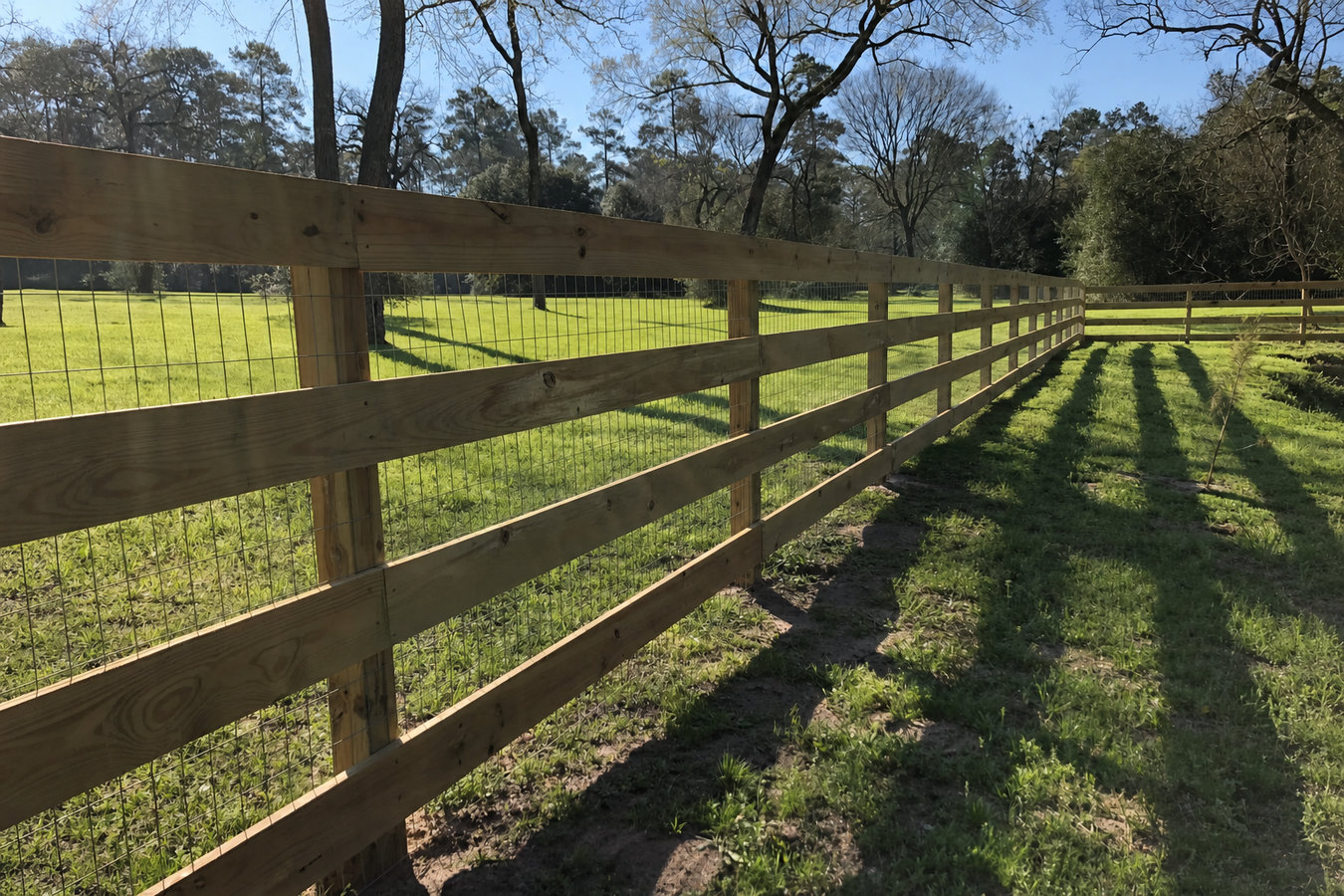
Perimeter fencing, cross-fencing, and horse-safe designs for rural properties in South Santa Clara County - post setting that holds up through wet winters and the rocky soils of the Diablo Range foothills.
Farm and ranch fencing in Morgan Hill covers perimeter fencing to define your property boundary and keep livestock in, cross-fencing to divide pastures, and horse-safe barrier designs - most installations on small-to-mid-size acreage run one to three days, with larger or more complex rural properties taking up to a week depending on terrain and material type.
Rural properties in the Morgan Hill area range from a few acres near Uvas Road to larger parcels in the Diablo Range foothills, and the soil and slope conditions vary significantly across that range. A fence contractor who has only worked on flat residential lots is not the right fit for a hillside horse property with rocky clay soil. We work regularly on rural land in South Santa Clara County and understand what the terrain here actually requires.
If you also have dogs or pets on your property, our pet and dog fencing page covers containment options designed for smaller animals. For rustic aesthetic applications on a rural property, wood fence installation outlines post-and-rail and board-on-board designs that also work well for property line definition.
Walk your fence line and push on each post. If it moves, the post has either rotted at the ground line or was never set deep enough. In Morgan Hill's clay-heavy soils, posts that were not treated for ground contact often fail within five to ten years as the soil holds moisture against the wood through the wet season.
Sagging wire is the most visible sign that a fence has lost tension - either because it was not pulled tight at installation, or because corner bracing has shifted over time. Once wire starts sagging, livestock can push through it, and the problem gets worse quickly as animals learn where the weak spots are.
If you are bringing horses onto a property that was previously fenced for cattle, or adding goats to a standard field fence, your existing fence may not be safe or secure for the new animals. Horses in particular need a fence that is both strong and visible - a fence that worked fine for cattle can cause serious injury to a horse.
Morgan Hill's wet winters can leave low-lying areas saturated for weeks. If a section of your fence runs through a spot that holds water after rain, those posts are being stressed every season. Soft, spongy ground around the base of a post - even if the post looks straight - is a sign rot has started and the post will fail sooner than you expect.
The most important variable in any farm fence is what you are containing and what your terrain looks like. For horse properties - and Morgan Hill has a well-established equestrian community - we build with no-climb wire and wood or steel rail for visibility, since a horse that cannot see the fence clearly is a horse at risk. For cattle and general livestock, woven wire with treated wood or steel posts is the standard, and the post spacing and bracing are sized for the animal pressure the fence will face. For property line definition and smaller animals, a basic post-and-rail or wood fence works well. We also handle cross-fencing for pasture rotation, custom gate placement for tractor access, and electric fence installation for perimeter and rotational grazing setups.
If you have pets that also share the property, our pet and dog fencing team can combine containment solutions so the same fence line serves both livestock and household animals. Gates are the most-used part of any farm fence and often the first to fail - we size gate posts heavier than line posts and brace them with diagonal supports, which is how they stay plumb and latching after years of daily use. Before any digging begins, we call 811 per California law to have underground utilities marked on your property.
Best for property owners who need a defined, stock-tight boundary around their entire acreage before bringing animals onto the land.
Designed for equestrian properties where fence visibility and the right post-and-rail or no-climb wire combination prevents injury to horses.
Suited to larger rural properties where pasture rotation, grazing management, or separating animal groups requires internal fence lines.
Morgan Hill sits at the edge of the Diablo Range, and many rural properties here have shallow, rocky soil or dense clay that makes post setting significantly harder than on flat valley land. Rocky ground often requires a power auger with a rock bit - and sometimes hand-digging around boulders - which adds time and labor that a contractor quoting from the road without visiting your property will miss entirely. Morgan Hill's Mediterranean climate also stresses fence materials in a specific way: long, hot, dry summers crack untreated wood, and the wet winters that follow drive moisture into those cracks and accelerate rot from the inside out. We use only posts rated for direct ground contact and build corner bracing the way it is meant to be built, so the fence holds tension after years in this climate. Rural homeowners in San Martin and Gilroy face the same foothill soil and seasonal climate challenges, and we work regularly on properties in both communities.
Some rural properties in and around Morgan Hill are enrolled in the Williamson Act, a California program that keeps land in agricultural use in exchange for reduced property taxes. Fencing that supports livestock or crop protection is almost always compatible with a Williamson Act contract, but if you are not sure whether your parcel is enrolled, Santa Clara County's assessor's office can confirm it before you start a large fencing project. For properties in designated fire hazard zones near the foothills, the California Department of Forestry and Fire Protection maintains guidance on defensible space that is worth reviewing before committing to fence materials near structures. See CAL FIRE for fire hazard severity zone information relevant to your parcel.
We will ask what animals you are containing, how many linear feet or acres you are working with, and whether the ground is flat or sloped. The answers change what materials and labor are needed, so the more specific you can be, the more accurate your estimate will be. You will hear back within one business day.
We visit your property to walk the fence line with you, check the soil and terrain, note gate locations and obstacles, and look for rocky sections or drainage low spots. A written estimate follows that breaks out materials and labor separately - making it straightforward to compare against other quotes.
Before any post is set, we call 811 to have underground utilities marked - California law requires it and it protects your irrigation and gas lines. We also confirm whether your specific project and zone require a county permit and handle that paperwork if it does.
The crew sets corner and end posts first - the anchor points every wire fence depends on - then works along the line setting intermediate posts and attaching wire or rails. Gates are hung last and adjusted to latch correctly. We walk the finished fence with you before leaving so you can check everything in place.
We walk your land first, price for your actual terrain, and build corners and gates that hold up through years of use. No surprises on the final invoice.
(669) 766-0045We work regularly on rocky and clay-heavy properties in the Morgan Hill and South Santa Clara County foothills. When we quote your job, we price for the terrain we will actually encounter - not a flat-pasture estimate that changes once we hit rock. You get a written price that reflects your land.
Morgan Hill has a serious equestrian community, and horse-safe fencing is not the same as general livestock work. We design for the right height, visibility, and materials so horses can see the fence at speed and respect it - not run through it. The difference matters every time your horses are turned out.
A wire fence is only as strong as its corners and gates. We build corner assemblies with proper diagonal bracing and size gate posts heavier than line posts, which is how they stay plumb and latching after years of daily use in this climate - not just the first season.
Morgan Hill's Mediterranean climate - hot dry summers followed by wet winters - is hard on untreated wood posts. We use only materials rated for direct ground contact, which meaningfully extends the life of the fence in the wet-dry cycle that this valley runs every year.
Good farm fencing comes down to the corners, the gates, the post depth, and the material choices - done correctly, a fence built here should last 20 to 30 years without significant work. Verify contractor licensing directly through the California Contractors State License Board, and consult UC Cooperative Extension for research-based guidance on livestock fencing best practices specific to California conditions.
Containment fencing sized and configured for dogs and smaller household animals - often combined with existing farm fence lines on rural properties.
Learn MorePost-and-rail, board-on-board, and split-rail designs for property line definition and aesthetic applications on rural and semi-rural Morgan Hill lots.
Learn MoreCall today or request a free estimate online. We walk your property first and price for the terrain you actually have.